
QPR’s horrible history of ACL injuries
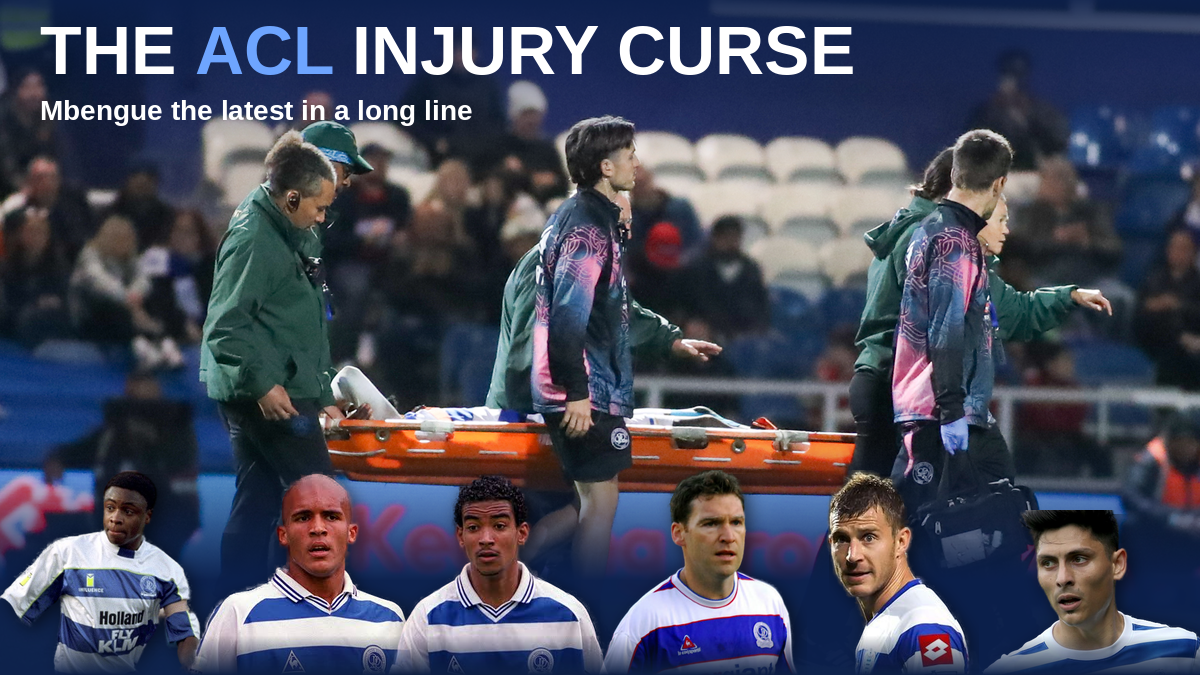
QPR have a horrible history of anterior cruciate ligament (ACL) knee injuries. Amadou Mbengue being sidelined by one is the latest chapter.
As team-mate Karamoko Dembele returned to action following his own ACL injury, Mbengue was facing up to a long spell out of action.
It will be no consolation to the Rangers defender to know that he joins a list with some prestigious names on it. This type of injury, a terrible blow at the best of times, has unfortunately tended to strike some of the club’s best and most important players.
They include none other than Paul Parker – one of QPR’s best-ever – who shone for England at the 1990 World Cup but in November that year suffered ACL damage.
It was in an era when ACL injuries were rarer and potentially much more disastrous for players than now. For that reason, Parker’s was an outstanding recovery. But his comeback later that season marked the tail end of his R’s career before his move to Manchester United.
It was also an era in which squad rotation wasn’t a thing. Rangers’ best player was injured in a Full Members Cup tie at Southampton – after being clattered into by his own goalkeeper, Tony Roberts.
Fast forward a few years and QPR had been relegated from the Premier League but were strongly fancied to return, partly because of the emergence of exciting youngsters like Kevin Gallen and Nigel Quashie.
Gallen scored in Rangers’ first two games in the second tier – both wins – but suffered ACL damage in the process of getting the winner in a Friday-night game at Portsmouth.
It was a hammer blow for Rangers, whose season disintegrated. They never seriously challenged for promotion back to the top flight before winning the League title 16 years later.
Before that promotion, there was a spell in the third tier, caused largely by their two standout players suffering ACL injuries – in the same match.
First Parker. Then Gallen. And the pattern of Rangers’ key players sustaining this injury continued into the 2000s
Ask QPR fans in 2000 who the club’s top players were and most would probably have answered Richard Langley and Clarke Carlisle.
Rangers had enjoyed a decent previous season under Gerry Francis. Langley had emerged as a serious talent. Carlisle, signed from Blackpool, was making a real name for himself.
The following season was not going well, but Francis’ side seemed to have more than enough to stay up. Until Carlisle was stretchered off and Langley later helped off the pitch during a defeat at home to Premiership-bound Fulham.
It was a disastrous night and ultimately a turning point. Rangers went down.
There arguably wasn’t a player more instrumental in the club’s recovery than the excellent Martin Rowlands. And the ACL curse duly struck him too.
Glory under Neil Warnock followed and, with Rangers in the Premier League, the darling of the fans was the talented and hugely likeable Alejandro Faurlin.
Again, it seemed that QPR’s best and most popular players had some kind of target on their back when it came to this horrible injury – which the luckless Faurlin suffered three times.
Andy Johnson, in only his fourth appearance after being signed from Fulham, and Jermaine Jenas, also suffered ACL injuries. So too did Luke Amos, who was well schooled at Tottenham and expected to make an impact in west London.
Mbengue’s long lay-off is not only another ACL injury QPR have had to contend with, but it continues the general problem of player unavailability that has hung over the club in recent seasons and is again a problem this term.
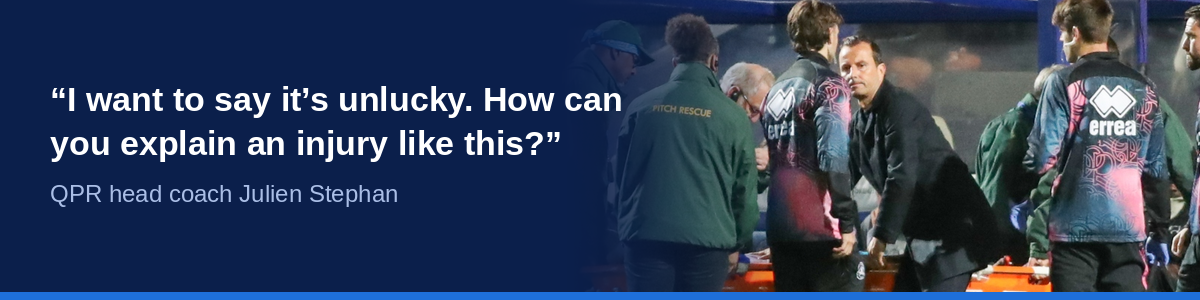
But, as head coach Julien Stephan put it last week: “We have to make the distinction between muscle injuries and injuries like this. I want to say it’s unlucky.
“How can you explain an injury like this? And in fact in terms of muscle injuries, we haven’t had a lot of muscle injuries since the start of the season.”
Rangers do currently have other options. Mbengue was possibly slipping down the pecking order, with Kealey Adamson impressing this season at right-back, a role Mbengue moved into partly because of the other options at centre-back.
But it does now mean that the ability of Tariq Lamptey – himself trying to rebuild after an ACL injury suffered prior to joining QPR – to regain fitness now takes on even greater importance.