
What England can learn from Australia’s love of cricket
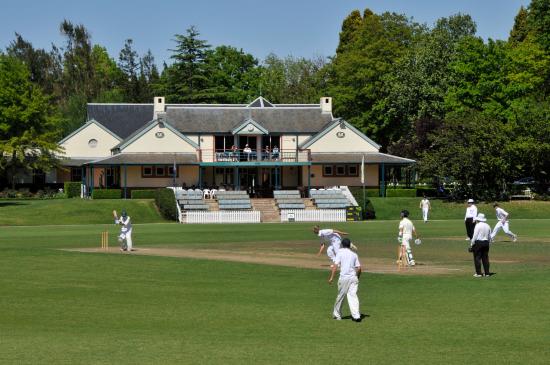
The road to Bowral, New South Wales, winds through landscapes uncannily reminiscent of the English countryside. Rolling pastoral hills press right up to the roadside and give way to grassy verges dotted with yellow and white wildflowers. Even the eucalyptus trees seem to be masquerading as beeches and oaks. The Hampshire illusion is shattered only by the dazzling Southern Hemisphere sun.
A few blocks from the main street, with its shopfronts of designer tableware, lies Bradman Oval. This small stadium with its worn pitch has long been a place of pilgrimage for Australian cricket fans. To step out to the middle is to walk on hallowed turf where Sir Don Bradman honed his craft. From the batsman’s position, beyond the white picket fence, you can see the houses on Shepherd Street and Glebe Street where he grew up. This intimate, almost village-like scale unexpectedly echoes the central theme of Australian cricket: cricket here is for everyone.
Four states where cricket keeps loneliness at bay
The Guardian journalist Emma John travelled alone through four Australian states and never once felt lonely. At the foot of the pink-granite Gawler Ranges, six hours’ drive from Adelaide, she checked into an empty motel, expecting a quiet dinner in a deserted dining room. Instead, the evening turned into a lively post-match get-together of the local Wudinna Cricket Club, with a family atmosphere and a warm welcome for a passing visitor.
In these parts, cricket is less a sporting discipline than the fabric of everyday social life. It greets you before the sights do, and stays with you longer than the road signs.
Cricket is everywhere—from parks to ocean waves
In parks and pubs, cricket remains the main summer talking point. In the Grampians in western Victoria, better known for world-class rock climbing, the backyards of cafés and restaurants turn into makeshift pitches. Parents toss balls to toddlers with miniature bats. Perth’s suburbs live and breathe beach cricket. And on one of Melbourne’s city beaches, the game was played waist-deep in the surf. The highlights can be summed up in a few snapshots:
- spontaneous matches behind mountain cafés,
- parents with children and mini bats on any patch of grass,
- beach cricket as an everyday scene in coastal suburbs.
Broadcasts, the Big Bash, and record crowds
Public love of cricket is reinforced by a strong media infrastructure. Channel 7, the free-to-air broadcaster for the Ashes series, made all matches available to watch free as on-demand replays, session by session. For matches that finished too quickly, this proved a tangible bonus.
The Big Bash tournament, which overlaps chronologically with the international summer season, adds a festival-like layer around cricket—without eating into attendance, instead boosting it. At New Year’s matches at the MCG and Optus Stadium, the combined crowd totalled 105,767 spectators, setting a record.
What else influences cricket’s popularity in the country
Cricket’s popularity in Australia is fuelled not only by broadcasts and live matches, but also by a well-developed betting industry. Cricket consistently ranks near the top of sportsbooks’ markets, noticeably ahead of rugby and football during the summer season.
Reviewing several iGaming rankings, we noticed that virtually every platform—including those offering no-deposit welcome bonuses—puts cricket markets front and center on the homepage. In particular, we looked at several bookmakers from a list of free cash bonuses in Australia, and almost all of them offer the widest range of options for betting on cricket. This is a clear indicator of the sport’s growing popularity.
In the UK, where cricket moved behind a paywall long ago, there is no comparable buzz around betting on the sport. The difference only underlines how deeply cricket is embedded in Australian life, including its commercial side.
Stadiums as a public good
Australia’s biggest Test venues are run by state-appointed trusts or government bodies. Adelaide Oval is ultimately owned by the people of South Australia. The model is geared not towards returns for venture investors and not towards privileges for members of closed clubs, but towards those who come to watch cricket—or might one day.
England and “closed” cricket
Against this backdrop, the English model looks sharply contrasting. Historically, cricket at home was privatised as far back as the 18th century, when aristocrats founded the Marylebone Cricket Club (MCC) and immediately secured copyright over the laws of the game. In the 21st century, the barriers have only multiplied:
- broadcasts have moved behind a paywall,
- cricket has disappeared from state school programmes,
- “dynamic” market pricing for tickets only ever seems to push prices up.
Reverse envy and nostalgia turned on its head
A paradox emerges: English fans travel to Australia to experience a cricket culture that the “old country” once considered part of its own identity. Emma John compares the situation to the story of viticulture. French vines planted in Australia in the 19th century survived the phylloxera blight that destroyed European vineyards, and today produce magnificent wines. Cricket, transplanted to another continent, shows similar resilience.
Local heroes and museums put together by volunteers
Four hours’ drive inland from Victoria, there is a tiny town with a population of just over a hundred people. Locals are so proud of their cricket hero Johnny Mullagh, a member of the legendary Aboriginal XI tour to England in 1868, that they turned an old bank building into a cosy, child-friendly museum. Out front there is a spot to have a bowl, and outside town a ground remains where Mullagh played, with a stone pyramid on a hillside marking the spot of his longest six.
The Bradman Museum in Bowral, which includes that very legendary oval, has not stood still in its development for almost four decades. The latest major addition is a permanent exhibition dedicated to women’s cricket, and a women’s hall of fame. Like the Mullagh centre, the museum is run largely by volunteers. At the same time, it is open 364 days a year and welcomes visitors from everywhere. From a place celebrating a man with a Test batting average of 99.94, you’d expect nothing less.