
Understanding the Calculation of American Football Point Spreads
Point spreads help to make things even between two American football teams when a weak team meets a strong one. In such cases, the better team receives a point handicap to even things out. The favorite needs to win by more points than the spread number to cover the bet. The underdog, on the other hand, either wins the game or loses by less than the spread number.
Calculation of point spreads involves a combination of statistics and market forces. Oddsmakers do not try to predict the exact score of the game. What they do is set a line that balances the bets on both sides.
For easy navigation through dynamic odds and market lines, use ufabet Access (ทางเข้า ufabet) to get live fixtures and competitive odds updates from all over the world of football. Understanding how the numbers are calculated will help you analyze the games better.
Point Spread Calculation Steps
- Establish Team Power Ratings
- Apply Home-Field Advantage (+1.5 to +2.5 points)
- Adjust for Key Player Injuries & Active Form
- Factor in Weather, Travel & Schedule Fatigue
- Align with Key Scoring Numbers (3, 7, 10)
Step 1: Calculating Team Power Ratings
The first step in setting a point spread is calculating team power ratings. Bookies assign numerical ratings to every team in the league. A power rating is an indicator of how strong a team is as compared to an average competitor on a neutral field.
Some of the factors that go into forming power ratings include:
- Offensive & Defensive Efficiency: Yards per play, scoring percentage, third-down conversion rate.
- Recent Form: Current level of play in the past three to four games.
- Margin of Victory: Winning/losing margins against good competition.
The subtraction of the underdog’s power rating from the favorite’s power rating forms the baseline spread.
Step 2: Consideration of Location, Weather, and Rest
After the oddsmakers set the initial spread value, it is adjusted taking into account some situational factors. First of all, location affects significantly. The traditional advantage of playing at home is from 1.5 to 2.5 points added to the home team side.
Also, the following factors are considered:
- Travel: Long travel distances and short recovery weeks influence team performance negatively.
- Weather conditions: Bad weather favors rushing offenses and reduces scoring margins.
- Injury reports: Loss of the starting quarterback is a drastic factor influencing the point spread, as well as injuries to the offensive line.
Step 3: Key Numbers and Market Adjustments
The scores in American football are made of definite increments because of field goals (3 points) and touchdowns (6 or 7 points). That is why the key numbers have a huge significance in spread settings.
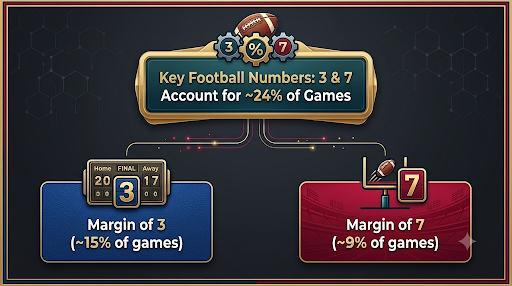
In football games, there are about 15% of games where the spread is three points and 9% when the spread is seven points. Bookmakers do not like moving the spread between those figures without strong market reasons. In order to prevent ties, half-points are introduced – “the hook” (-3.5 or -6.5).
For placing bets on contemporary betting websites, one needs to look at something other than just the game lines. Using a Football Betting Website (เวฟแทงบอล) provides users access to all sorts of line movements, match markets, and odds comparisons of major sports matches.
How Spreads Respond to Money
- ●Opening Line: Purely based on power ratings & statistics
- ●Heavy Betting Action: Spread adjusts to balance the risk
- ●Key Number Protection: Addition of half-points
Conclusion: Balance of Statistics and Market Forces
Point spreads are not a fixed prediction of scores. Point spreads are dynamic mathematical lines that incorporate team statistics, situation, and market forces. Combining power ratings and key figures, oddsmakers come up with balanced fixture lines.


