
The 80-Minute Engine: Building Rugby’s Unique Endurance
Rugby isn’t a marathon. It’s 80 minutes of repeated, violent sprints. It’s the lung-burning chase to make a cover tackle after a 60-meter line break, then getting up to secure the next ruck. This specific demand, the ability to produce explosive power, repeatedly, under extreme fatigue, defines the sport. Building this engine requires more than just logging miles on a treadmill. It demands a sophisticated blend of metabolic conditioning, raw strength, and mental fortitude, all designed to keep you effective from the first whistle to the last.
The Foundation: Strength as an Endurance Tool
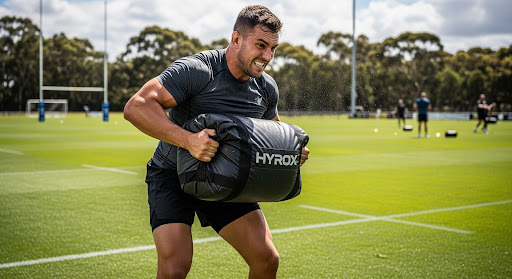
A stronger athlete is a more efficient one. Every scrum engagement, every clearing run, every tackle requires muscular force. When you are stronger, each of these actions consumes less of your overall energy reserve. This is why strength training is the bedrock of rugby endurance. Your gym work must focus on heavy, compound movements that build total-body power. Think barbell squats, deadlifts, and weighted carries. For conditioning circuits that mimic the sport’s chaotic energy, training with standardized HYROX weights, like sleds and sandbags, provides a perfect benchmark for measuring work capacity under load, blending strength and cardio in a way that directly translates to the pitch.
The Power of Interval Training
Forget long, slow distance runs. Rugby is a game of intense bursts followed by brief, active recovery. Your conditioning must reflect this reality. High-Intensity Interval Training (HIIT) is the gold standard. A classic session might involve 30-second all-out sprints on a bike or rower, followed by 90 seconds of light movement. Another potent method is shuttle runs, suicide sprints that build the specific leg-burning endurance needed for defensive line speed and offensive support lines. These sessions teach your body to buffer lactate, recover quickly between plays, and maintain a high work rate.
Developing Repeat-Sprint Ability
This is the holy grail of rugby fitness. It’s not about one fast sprint; it’s about your tenth fast sprint. Developing this quality requires brutal, specific drills. A typical repeat-sprint session could involve 10×40-meter sprints, with only 20 seconds of rest between each one. The drop-off in your time from the first sprint to the last is your measure of progress. Another method is “beep test” style running, which progressively increases the pace until failure. This kind of training is mentally and physically grueling, but it forges the resilience needed for the final quarter of a tight match.
The Role of Active Recovery
Endurance isn’t just built in the hard sessions; it’s preserved through intelligent recovery. The walk back to the halfway line after a kick, the jog to a lineout, these are not breaks. They are active recovery periods where your body works to clear metabolic waste and restore energy systems. Training should include practicing this. After a punishing sled push or a set of burpees, don’t collapse. Force yourself to walk, to breathe deeply, to prepare for the next effort. This conditions both your body and your mind to use fleeting moments of respite effectively.
Fueling the Machine
An 80-minute performance is impossible without proper fuel. This starts with hydration, which is a daily commitment, not just a gulp before kickoff. Your nutrition must support both intense training and recovery. Carbohydrates are not the enemy; they are the premium fuel for your high-octane engine. Consuming a mix of fast and slow-releasing carbs before a game or a hard training session ensures your glycogen stores are fully stocked. Post-exercise, a combination of protein and carbs is essential to repair muscle tissue and replenish energy for the next day’s work.
Building rugby endurance is a multi-faceted mission. It’s the marriage of brute strength with elite cardiovascular capacity, all hardened by a mindset that embraces discomfort. By integrating heavy strength training, sport-specific HIIT, repeat-sprint drills, and disciplined recovery, you build more than just fitness. You construct an 80-minute identity, a player who not only starts strong but finishes stronger, a competitor who is still making decisive plays when others are fading. That is the ultimate advantage.