
Safe Gambling Myths Players Still Believe
Safe gambling tools have become a cornerstone of regulated online casinos, yet misinformation remains widespread. Many players still rely on outdated beliefs and untested advice, assuming these ideas protect them from losses. In reality, a large percentage of gambling harm comes from misunderstanding how risk, randomness, and responsible-play systems truly work. The industry has changed, regulators have tightened requirements, and technology has evolved – but the myths survived.
Casinos Do Not Always Want You to Bet Longer
Some players still believe casinos prefer users who gamble endlessly, but this picture is outdated. In modern regulated markets, operators are legally obligated to monitor behaviour and protect players showing signs of harm. If they fail, they risk large fines, suspended licences, or public sanctions. Many players are surprised to learn that casinos sometimes block deposits, remove bonus access, or freeze accounts if a user’s spending rises too quickly.
Why This Myth Persists
This assumption survived because older offshore casinos had no rules. In the early 2010s, it was common for unlicensed platforms to encourage long sessions and ignore player complaints. Today’s licensed casinos, like Bubbles Bet Casino, operate under strict regulatory oversight. They must record behavioural data, monitor losses, and initiate wellness checks. When a casino restricts spending, it is not a trick – it is compliance.
Myths About “Luck Resetting” and Safe Play
Another widespread belief is that taking a break makes winning more likely. Players assume bad luck eventually “balances out,” or that a long losing streak means a win is coming. Slot machines, roulette wheels, and card deals do not track history. The outcome of a spin is independent of everything that happened earlier. Random Number Generators start fresh with each spin, which means probability never remembers.
Randomness Is Not a Safety Feature
Superstition can feel comforting, especially after losses, but it has nothing to do with mathematics. A slot that paid a jackpot yesterday is not “cold” or “due” today. The only reliable way to improve safety is through budgeting, time limits, and emotional control – not hope or pattern-watching.
Clearing Up the Biggest Misconceptions
Before players can use responsible tools effectively, it’s important to confront the false assumptions that block progress. When someone believes myths about gambling safety, they tend to ignore the real warning signs. To make this more transparent, the table below compares common player beliefs with how regulated systems actually work.
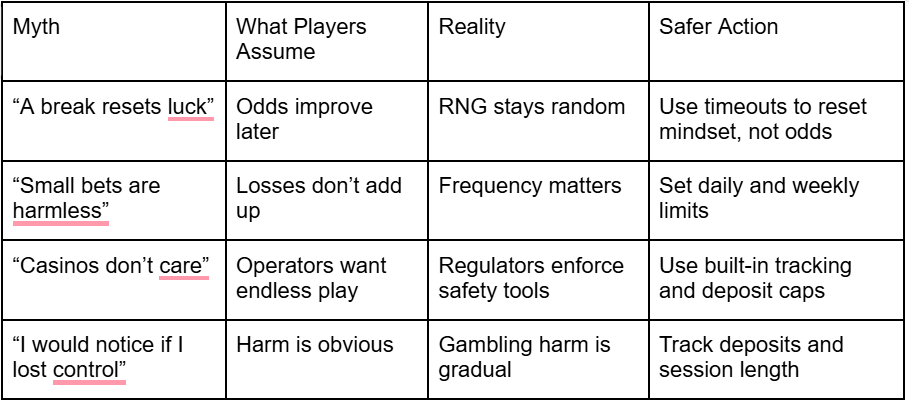
When players understand the facts, they make better decisions and avoid dangerous assumptions.
What Responsible Gambling Tools Actually Do
Some players view responsible-play tools as marketing or optional features, but they exist because casinos must protect users from rapid financial loss. Deposit caps limit spending, cooling-off periods force breaks, and reality checks show time spent in-session. These tools are not psychological tricks – they are required under law.
Why Most Players Ignore These Options
A surprising number of regular gamblers avoid limits because they believe limits are only for addicts. In reality, they function the same way seatbelts do in a car – they are there to protect you even on a calm day. Setting limits early prevents impulsive decisions during emotional moments.
Warning Signs That Limits Are Needed
Many players assume they would immediately notice if gambling started to affect their behaviour. In practice, harm rarely appears suddenly. It grows slowly – one extra deposit, one extended session, one small loan to keep playing. Preventing escalation is easier than repairing damage.
Here are common indicators that a player should enable limits:
- Depositing more than originally planned
- Chasing losses with “just one more deposit”
- Feeling angry or stressed after betting
- Hiding gambling from friends or family
- Difficulty remembering the total weekly spend
These behaviours do not mean someone has a serious problem – but they show that spending control is slipping.
Why Education Matters
Regulators can build systems and casinos can add protections, but myths still influence behaviour. Some users believe they are too smart to lose control. Others think only high-rollers suffer harm. Reality shows the opposite: most people who struggle with gambling started with small, casual sessions.
Where Information Makes a Difference
When players understand basic principles – randomness, odds, emotional bias, budget planning – the chance of harm drops sharply. Safe play is not about luck or superstition; it is about structure.
Outlook
In 2026, the safest gamblers will not be the luckiest or the most skilled – they will be the most informed. Modern platforms already offer tools that protect players from themselves, but myths continue to cloud judgment. Removing those misconceptions is the first step toward safer play. With clearer education and better transparency, gambling becomes what it should be: entertainment, not a crisis.


