
Online Gaming Security: How to Protect Your Account and Personal Data
Online gaming has become a regular part of everyday life for millions of people. Players create accounts, purchase digital content, join multiplayer communities, and connect their profiles across different devices. While these features make gaming more convenient, they also create opportunities for scammers and cybercriminals.
A compromised account can mean lost progress, stolen payment details, or unauthorised purchases. Protecting personal information is therefore just as important as choosing a reliable game or platform. The good news is that a few practical security habits can significantly reduce common risks without making every gaming session feel like a technical exercise.
Why Online Gaming Accounts Are Attractive Targets
Gaming accounts can hold more valuable information than players realise. Some contain saved payment methods, personal details, friends lists, private messages, and access to purchased games. Accounts with rare items, valuable skins, or extensive progress may also attract people looking to steal and resell digital assets.
Cybercriminals use several methods to gain access. Phishing messages imitate official support teams, fake giveaways encourage users to reveal their credentials, and malicious downloads can install software that collects sensitive information. Sometimes attackers simply reuse passwords exposed in unrelated data breaches.
Common warning signs include:
- Unexpected password reset emails or login notifications.
- Messages offering free currency in exchange for account details.
- Websites with suspicious addresses that imitate familiar gaming platforms.
- Unrecognised purchases or changes to account settings.
- Requests to disable security features or share verification codes.
Recognising these signs early can help players respond before a minor security issue becomes a serious problem.
Online gaming security also matters when players use digital entertainment platforms beyond traditional video games. For example, adults interested in online casino payments may research options such as Neosurf casino Australia to understand which operators accept Neosurf and what conditions apply. Before making a deposit, it is important to check the platform’s reputation, payment terms, privacy policy, and local legal requirements. The same principle applies to gaming stores and subscription services: always verify the provider before sharing personal or financial information.
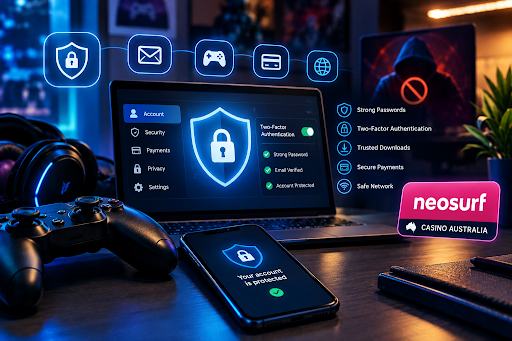
Create Strong Passwords and Enable Two-Factor Authentication
A strong password remains one of the simplest ways to protect a gaming account. Avoid using the same password for a game launcher, email account, online store, and social media profile. If one service suffers a data breach, reused credentials can put every connected account at risk.
A password manager can generate and store unique passwords, reducing the temptation to rely on familiar names or predictable combinations. Longer passwords or passphrases are generally preferable to short, complicated strings that are difficult to remember.
Two-factor authentication (2FA) adds another layer of protection. Depending on the service, it may involve an authenticator application, a security key, or a one-time verification code. Even if someone obtains a password, the additional requirement can make unauthorised access more difficult.
For better account security:
- Use a unique password for every important account.
- Enable 2FA wherever it is available.
- Secure the email address linked to your gaming profile.
- Store backup recovery codes somewhere safe.
- Never share verification codes with another person, including someone claiming to represent customer support.
Email security deserves particular attention because password resets for other services often depend on access to the associated inbox.
Download Games, Mods, and Updates From Trusted Sources
Unofficial downloads can introduce risks that extend beyond the game itself. Modified installers, fake patches, cheat tools, and files advertised as free premium content may contain malware or unwanted software.
Players who enjoy modding should check the reputation of the source before downloading anything. Look for recent community feedback, clear installation instructions, and evidence that files are maintained by recognised creators. Scan downloads with reputable security software and be cautious if an installer requests unnecessary administrator privileges.
A few additional precautions can make a difference:
- Download games and updates from official stores or verified publishers.
- Check file extensions before opening downloaded files.
- Avoid disabling antivirus protection just to install an unfamiliar modification.
- Keep your operating system, browser, and security software updated.
- Back up important saves and configuration files regularly.
Mods can improve a game’s visuals, performance, and replayability, but no community recommendation guarantees that a file is safe. If a download seems suspicious, skipping it is usually better than risking an entire account or device.
Protect Payment Details When Buying Digital Content
Payment security is another important part of online gaming. Players may purchase full games, subscriptions, downloadable content, virtual currency, or cosmetic upgrades. Each transaction creates an opportunity to expose financial information if the checkout page or merchant is not trustworthy.
Before entering payment details, check the website address and make sure the merchant is legitimate. A padlock symbol and HTTPS connection indicate that data is encrypted in transit, but they do not prove that a website itself is honest. Research unfamiliar sellers and avoid offers that seem implausibly cheap.
Different payment methods provide different levels of convenience and control.
| Payment method | Potential benefit | What to check |
|---|---|---|
| Debit or credit card | Widely accepted and convenient | Transaction alerts, card security, and dispute procedures |
| Digital wallet | Can reduce repeated sharing of card details with merchants | Account protection, fees, and supported currencies |
| Prepaid voucher | Helps separate a set amount from everyday bank spending | Merchant acceptance, expiry rules, and redemption restrictions |
| Bank transfer | Useful where supported for direct payments | Recipient details and processing times |
| Mobile billing | Convenient for eligible purchases | Carrier limits and additional charges |
No payment method eliminates every risk. Prepaid vouchers, for example, may help limit the amount available for a transaction, but they do not automatically make a merchant trustworthy or guarantee anonymity.
Recognise Phishing, Fake Giveaways, and Social Engineering
Not every attack relies on sophisticated software. Many scams work because they create urgency or exploit a player’s excitement about a new release, tournament, or giveaway.
A message might claim that an account will be suspended unless the user signs in immediately. Another may promise a rare skin in exchange for clicking a link or connecting a gaming profile to an unfamiliar website. Fake support agents may contact players through direct messages and request passwords or verification codes.
Treat unexpected offers with caution, especially when they ask you to act quickly. Visit the platform’s official website independently rather than following links in unsolicited messages. If a promotion is genuine, its terms should normally be available through an identifiable official source.
Remember these basic rules:
- Legitimate support staff should not need your password.
- Free rewards should not require you to disclose sensitive credentials.
- Never approve an unfamiliar login request.
- Check the sender’s identity before opening attachments.
- Report suspicious messages through the platform’s official reporting tools.
A healthy level of scepticism can protect both your account and your friends. Compromised profiles are often used to send convincing scam messages to other players.
Secure Your Device and Gaming Network
Account protection does not stop with passwords. An outdated operating system, an unsecured router, or a shared computer can expose personal information even when login credentials are strong.
Install security updates promptly and remove applications you no longer use. On a shared device, create separate user profiles and avoid saving payment details where other people can access them. Use a screen lock on phones and tablets, particularly if you make purchases through mobile applications.
Public Wi-Fi requires extra care. Avoid accessing sensitive accounts on networks you do not trust, and never ignore browser warnings about suspicious connections. A reputable VPN may help protect traffic on certain networks, but it does not prevent phishing, malware, or fraudulent websites.
Parents and guardians can also review privacy settings, communication permissions, and purchase controls on accounts used by younger players. These settings help limit unwanted contact and reduce the likelihood of accidental spending.
What to Do If Your Gaming Account Is Compromised
Even careful users can encounter security incidents. Acting quickly may reduce the damage.
If you suspect an account has been hacked:
- Change the password from a trusted device, starting with the linked email account if necessary.
- Sign out of other active sessions and remove unfamiliar connected applications.
- Enable or reset two-factor authentication.
- Review recent purchases, linked payment methods, and account changes.
- Contact the platform’s official support team if you cannot regain access.
- Notify your bank or payment provider about unauthorised transactions and ask about available dispute options.
- Scan the affected device for malware and update its software.
Keep relevant transaction records and support correspondence. Do not pay someone claiming they can recover your account through unofficial channels, as recovery scams often target victims a second time.
Final Thoughts
Online gaming security depends on several habits working together. Unique passwords, two-factor authentication, trusted downloads, careful payment choices, and regular software updates all help reduce exposure to common threats.
Players should also remember that convenience is not proof of safety. Whether buying a new release, installing a community modification, or paying for a digital entertainment service, verify the provider and read the terms before sharing personal or financial information.
A few minutes spent checking a website or adjusting account settings can prevent hours of frustration later. By treating security as part of the gaming routine, players can protect their progress, their purchases, and their personal data while enjoying online entertainment with greater confidence.


