
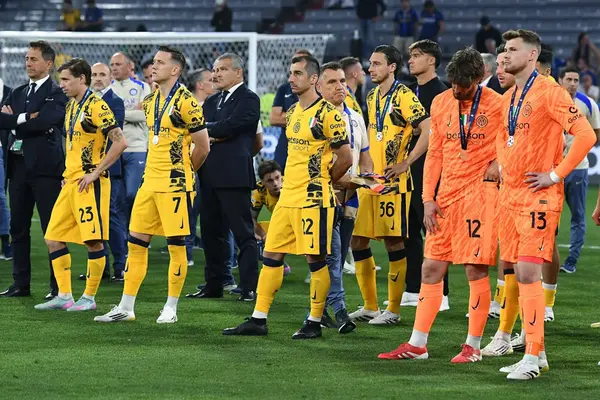
Inter’s Season of Heartbreak: When Dreams Crumble in Multiple Finals
Inter Milan’s 2024-25 campaign will be remembered as one of the most tragic seasons in recent football history. The Nerazzurri came tantalizingly close to achieving unprecedented success, only to see their dreams shattered across multiple competitions in the cruelest possible fashion.
What makes Inter’s story particularly painful is the sheer scale of their missed opportunities. The Milan-based club had realistic chances of winning five major trophies within a calendar year, a feat that would have cemented their place among the greatest teams in football history. Instead, they ended the season empty-handed, joining the ranks of famous underachievers like Atletico Madrid and Valencia.
The psychological impact of such repeated failures cannot be understated. When a team consistently reaches the biggest stages only to fall at the final hurdle, it creates a mental burden that affects players, coaching staff, and supporters alike. parimatch-japan.com analysts have documented similar patterns in football history, where clubs experience golden generations that ultimately yield nothing but heartbreak and what-if scenarios.
Inter’s statistics paint a sobering picture: five defeats in eight finals, a record only surpassed by Juventus with seven losses in nine finals. This level of consistent near-success followed by ultimate failure represents one of football’s cruelest ironies.
Champions League Devastation and European Heartbreak
The Munich Massacre
Inter’s Champions League final defeat to PSG in Munich will haunt the club for years to come. After reaching the final for the second time in three years, they were completely dismantled by Luis Enrique’s tactical masterclass, losing 5-0 in what can only be described as a humiliation on football’s biggest stage.
The path to the final had been exemplary. Inter navigated past Manchester City, Arsenal, Monaco, Bayern Munich, and Barcelona – a collection of European elite that demonstrated their quality. The semifinal victory over Barcelona was particularly impressive, showcasing the tactical acumen of Simone Inzaghi and his players’ ability to execute under pressure.
Many anticipated a fascinating battle between Ousmane Dembele and his former club Barcelona, but Inter’s magnificent performance against the Catalans overshadowed individual storylines. Knowing what would transpire in Munich, the players might have preferred to lose in the semifinals rather than suffer such devastating humiliation in the final.
The defeat has significant implications for Inzaghi’s future. With two unsuccessful Champions League finals on his resume, the Italian coach finds himself closer to a potential move to Saudi Arabia. For Inter, the loss highlighted the aging nature of their squad and the need for comprehensive reconstruction.
European Pattern of Failure
Inter’s European disappointments echo historical precedents that offer little comfort to suffering supporters. The comparison to Bayer Leverkusen’s 2001-02 season proves particularly apt. Klaus Toppmoller’s brilliant team, featuring Michael Ballack, Ze Roberto, and Lucio, collected a series of near-misses that earned them the cruel nickname “Neverkusen.”
Like Inter, Leverkusen reached the Champions League final only to lose to Real Madrid, while simultaneously surrendering domestic trophies to rivals despite fighting until the final moments. The psychological parallels are unmistakable.
Valencia’s two Champions League final defeats also provide historical context for Inter’s pain. Hector Cuper understands the emotions currently consuming Inzaghi, having experienced similar devastation in European finals against the same opponents.
Domestic Disasters and Derby Defeats
Supercoppa Heartbreak in Saudi Arabia
Inter’s domestic season began with genuine optimism and realistic expectations of multiple trophies. As favorites for three internal competitions, they started with the Supercoppa Italiana in Saudi Arabia, reaching the final after defeating Atalanta in the semifinals.
The Milan derby final seemed manageable, especially with AC Milan having changed coaches mid-season. Inter appeared in complete control, leading 2-0 and seemingly cruising toward their first trophy of the campaign. Then disaster struck.
Sergio Conceicao’s tactical adjustments transformed the match. Milan orchestrated a stunning comeback, with Tammy Abraham delivering the decisive blow in stoppage time. For Inter supporters, this defeat proved particularly painful because it came against their city rivals, adding psychological warfare to sporting disappointment.
The February derby encounter in Serie A compounded these problems, with Inter dropping two crucial points that would later prove decisive in the title race. These head-to-head failures against Milan across multiple competitions created a pattern of weakness that opponents began to exploit.
Scudetto Surrendered to Cunning Conte
Scott McTominay’s first attempt at winning the Scudetto proved successful, with the Scottish midfielder earning Serie A’s Most Valuable Player award. Napoli’s remarkable transformation from tenth place to champions represents one of the season’s most impressive achievements.
Inter, despite being favorites and accumulating 94 points the previous season, found themselves distracted by Champions League commitments. The aging of key players affected the team’s freshness, while squad rotation failed to maintain consistent performance levels.
Key defeats to Bologna and Roma proved decisive in the final reckoning. These unexpected setbacks, combined with a crucial draw against Lazio, undermined Inter’s title aspirations. Although head-to-head meetings between Inzaghi and Antonio Conte produced identical 1-1 draws, the Scudetto returned to Naples.
Conte’s future remains uncertain, with Juventus reportedly interested in his services. Such a move would provide Inter with another formidable rival in an already competitive landscape.
Cup Competitions and Continuing Disappointments
Coppa Italia Catastrophe
The Coppa Italia semifinal against Milan epitomized Inter’s season of missed opportunities. After losing the first leg, they faced their city rivals in the return match knowing that victory would secure a final appearance.
Milan’s comprehensive 3-0 victory eliminated Inter and highlighted the psychological advantage their rivals had established. The Rossoneri’s ability to defeat Inter across multiple competitions created a narrative of superiority that extended beyond individual matches.
Bologna’s ultimate victory in the final added salt to Inter’s wounds. Vincenzo Italiano’s team claimed their first trophy in 51 years, benefiting from Milan’s unexpected route to the final. For Inter, watching another underdog claim a trophy they had realistically expected to win provided additional frustration.
The pattern repeated across competitions: Inter consistently reached advanced stages only to be eliminated by teams they had expected to defeat. This psychological barrier became increasingly difficult to overcome as the season progressed.
Historical Parallels and Future Prospects
Inter’s season draws uncomfortable parallels with some of football’s most famous near-misses:
- Bayer Leverkusen 2001-02: Lost Champions League final to Real Madrid, surrendered domestic titles
- Valencia 2000-2001: Two Champions League final defeats to the same opponents
- Atletico Madrid: Multiple final defeats creating psychological scars
The comparison with Atletico Madrid proves particularly relevant, given Diego Simeone’s repeated failures against Real Madrid in Champions League finals. The Argentine coach understands the psychological burden of consistent near-success better than most.
For Inter veterans like Acerbi, Sommer, and Lautaro Martinez, this season represents a Shakespearean tragedy. Players who have given everything for the club find themselves empty-handed despite reaching multiple finals.
However, perspective remains important. Nobody predicted two European finals for Inter in three years, and their consistent competitiveness across multiple competitions demonstrates underlying quality. Even Barcelona, despite financial advantages, couldn’t match Inter’s European consistency.
The challenge for Inter involves managing expectations while maintaining competitive standards. Veterans who might not attract interest from Arsenal, Manchester City, Real Madrid, or PSG due to age continue performing at high levels. Their demonstration of collective work deserves recognition, similar to PSG’s eventual triumph after early Champions League struggles.
Inter’s rebuilt squad will retain key advantages moving forward. Their tactical discipline, European experience, and institutional knowledge provide foundations for future success. The disappointment of this season, while devastating, could fuel motivation for upcoming campaigns.
The Club World Cup presents an immediate opportunity for redemption, with Inter set to face Real Madrid, PSG, and other European powerhouses. For a team that has proven capable of defeating the continent’s elite, the chance to claim a global trophy offers hope after a season of heartbreak.
Inter’s tragic season serves as a reminder of football’s cruel nature, where excellence doesn’t guarantee rewards and the margins between triumph and disaster remain impossibly thin. Yet their consistent presence at football’s top table suggests that eventual success, while delayed, remains achievable for this proud institution.