
How video technology reshaped the betting experience
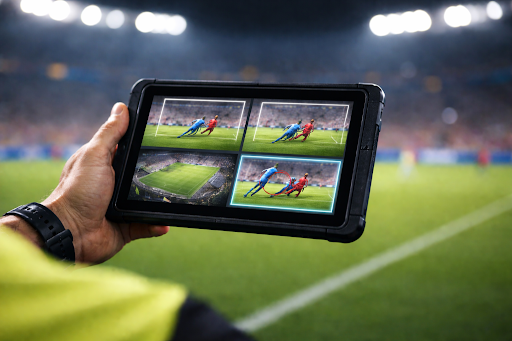
A penalty decision was overturned. Three minutes of uncertainty. Odds frozen mid-match.
VAR arrived in top-level football during the 2018 World Cup, promising fairness and accuracy in officiating. What few anticipated was how profoundly this technology would reshape in-play betting markets. The numbers tell an unexpected story: match stoppages increased by 33% in games using VAR, and with each stoppage came market suspensions that fundamentally altered how risk managers operate.
Platforms like OnjaBet had to completely overhaul their live betting systems to account for these interruptions, developing new algorithms that could pause and recalibrate odds during VAR reviews.
The mechanics of market suspension during VAR reviews
When a referee signals for a VAR check, betting platforms face an immediate decision point. The review creates information asymmetry—someone watching the television broadcast might see the replay seconds before odds compilers can react. This gap, though brief, poses significant risk exposure.
Research from the Turkish Super League analyzing over 3,300 matches revealed that fouls decreased for both home and away teams after VAR implementation, with medium effect sizes. VAR impact on football statistics shows this pattern repeating across European leagues. Yet goals, cards, and penalties showed minimal statistical change—what changed was timing and certainty.
Market suspensions during VAR reviews create distinct challenges for operators:
- Real-time odds calculation becomes impossible during review periods
- Sharp bettors gain temporary advantages through broadcast feeds
- Casual bettors experience frustration with suspended markets
- Risk exposure multiplies during critical match moments
- Automated trading systems require manual override capabilities
Risk management evolution in the VAR era
Traditional in-play betting relied on continuous price movement. Studies showed that after VAR introduction, playing time increased significantly in first halves, second halves, and full matches, with large effect sizes. Longer matches mean extended betting windows, but paradoxically, less actual betting time when accounting for review stoppages.
Major operators adapted by developing VAR-specific protocols. When a potential penalty gets reviewed, markets don’t just suspend—they recalibrate based on review likelihood. Betting technology VAR adaptation demonstrates how sophisticated traders now price in review probability before officials even signal for assistance.
The data reveals interesting patterns. Match statistics remained relatively stable post-VAR, but betting behavior shifted dramatically. Bettors learned to anticipate reviews, creating mini-markets around VAR intervention probability itself.
Live betting transformation and player behavior
A survey showed 95% of fans found video refereeing technology made their match experience less enjoyable in 2021, with only 26% favoring keeping VAR. This sentiment directly impacted betting engagement. Spontaneity—the emotional driver of live wagering—suffered from review delays.
Yet the industry adapted. Platforms introduced VAR-specific betting features, such as “will this decision be overturned” micro-markets. These innovations turned disruption into opportunity, though they fundamentally changed the nature of in-play betting from reactive to anticipatory.
The technical infrastructure evolved, too. Modern platforms now feature:
- Automated market suspension triggers linked to referee signals
- Multi-tiered odds adjustment algorithms accounting for review complexity
- Enhanced delay systems preventing broadcast-based advantage betting
- Specialized VAR review outcome markets
- Integration with official match data feeds for faster resumption
The 2026 World Cup and expanded VAR powers
Reports indicate FIFA may grant VAR additional powers over corner kicks and second yellow cards for the 2026 World Cup, currently restricted to red cards and penalties. This expansion would multiply market suspension frequency, forcing another adaptation cycle for betting operators.
The upcoming tournament, hosted across Canada, Mexico, and the United States, will feature 48 teams and 104 matches—the largest World Cup in history. With AI-powered VAR assistance being tested, the integration of artificial intelligence aims to refine decision-making processes further. For betting markets, this means faster reviews but potentially more frequent interventions.
VAR teams monitor ongoing matches from video operation rooms and can recommend that referees review specific incidents, creating unpredictable market freeze points. Advanced betting platforms now employ AI themselves to predict review likelihood, creating an arms race between officiating technology and betting market technology.
The financial implications remain substantial. Live betting represents over 50% of total handle for many platforms in 2026, with football dominating that volume. Each VAR suspension represents a lost betting opportunity and potential liability exposure. Operators who master VAR-era risk management gain competitive advantages in an increasingly sophisticated market.
As technology continues to reshape both football and betting, the relationship grows more complex. What started as a fairness tool for officiating has become a central factor in how millions engage with football financially. The market adapted, but the adaptation required fundamental changes to systems designed around uninterrupted play.