
Creating Action Scenes from Written Descriptions
Action scenes intimidate a lot of writers because they seem like they need massive production resources. Stunt coordinators, multiple camera angles, expensive equipment, professional choreography. Text to video generation flips that completely.
You describe your action sequence in words, and Dreamina’s Seedance 2.5 renders it into actual choreographed footage that shows whether your written action actually works visually. The challenge isn’t production logistics anymore—it’s learning to describe action sequences clearly enough that the model understands exactly what you’re trying to communicate and renders it with the specific pacing and intensity you intended.
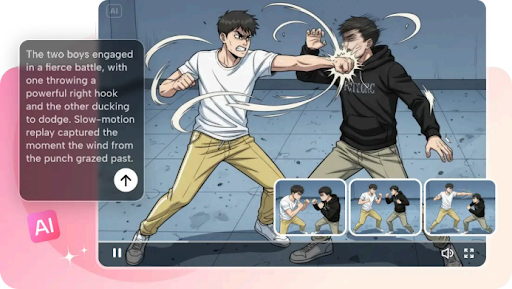
Why action scenes need precise description
Action is the hardest thing to communicate through words because it happens in time and space. A sentence describing a punch takes seconds to read, but a punch takes milliseconds to execute. A paragraph explaining a chase scene compresses what might be thirty seconds of actual footage. That compression gap means action descriptions often sound either too vague or ridiculously over-detailed.
The key is describing action functionally rather than poetically. Don’t write “he leaped through the air with grace.” Write “he jumped from the rooftop to the adjacent building, barely catching the edge.” That specificity tells you exactly where the action happens and what the challenge is. Seedance 2.5 then renders that specific action sequence rather than making assumptions about what you meant.
Emotional stakes beneath physical action
The most compelling action sequences have emotional stakes. Someone fighting to protect someone they love moves differently than someone fighting for sport. A chase where the pursuer is desperate differs from a chase where they’re confident. That emotional undercurrent makes action matter beyond just watching bodies move.
When describing action, weave in emotional purpose. “She fights defensively, protecting the person behind her.” “He’s desperate to catch up before it’s too late.” “They move with mutual respect, testing each other’s skill.” That emotional context transforms action from spectacle into genuinely meaningful moments.
Building your action sequence: Dreamina’s action choreography
Step 1: Outline your action sequence and write your choreography prompt
Visit Dreamina, sign in, and head to the “AI Video” section. Plan your action sequence step-by-step. What’s the opening? How does it escalate? What’s the climactic moment? Click “Add reference image” if you have action references or inspiration. Write your action prompt describing your sequence with specificity about character positions, movement patterns, environment interaction, pacing rhythm, and emotional stakes.
A detailed prompt for 60 seconds might read: Two fighters begin circling cautiously, establishing distance and testing balance, then the first attack comes fast and aggressive while the defender responds methodically, using the opponent’s momentum against them, the fighting gradually becoming more intense with shorter pauses between exchanges, the environment of the confined space forcing tactical positioning, the defender moving defensively while the attacker commits fully, the sequence building toward a moment where the defender finally finds an opening and shifts momentum, ending with both fighters momentarily exhausted.
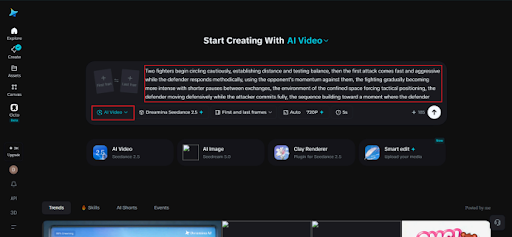
Step 2: Generate your action sequence with Seedance 2.5
Select Seedance 2.5 as your generation model. Choose 45-90 seconds, allowing your action sequence to develop with proper pacing and rhythm. Pick 16:9 for action sequences or 9:16 for social platforms. Click Dreamina’s generation icon and watch your choreography description become actual footage showing physicality and movement with authentic action dynamics.
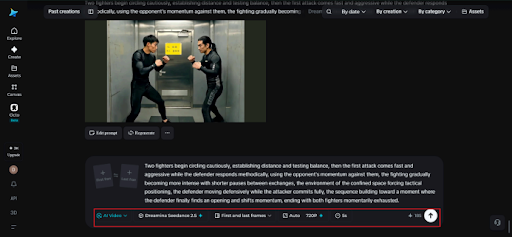
Step 3: Evaluate choreography and enhance impact
Use Dreamina’s AI editing tools to strengthen action clarity. Upscale sharpens movement details, making choreography and physicality clearly visible. Generate Soundtrack adds audio supporting action intensity and pacing. Review your action footage, confirming that choreography makes sense physically, pacing creates rhythm rather than constant chaos, and emotional stakes remain clear beneath the movement. Export and share.
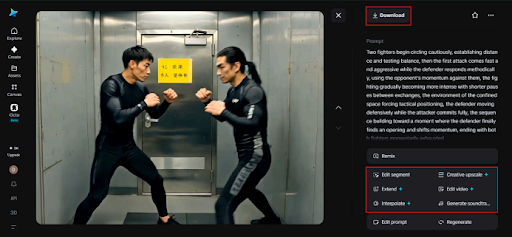
Seedance 2.5’s Action-Rendering Mastery
Seedance 2.5 was engineered specifically to render action sequences with authentic physicality and choreographic sophistication that make generated action actually look like real movement rather than weightless dancing.
Realistic physics in movement
The model understands how bodies actually move under physical constraints. Gravity affecting jumps and falls. Momentum requiring adjustment. Impact having weight and consequence. Characters moving realistically rather than defying physics through impossible feats.
Consistent character physicality across sequences
The model maintains how specific characters move based on their established capabilities. Someone trained in combat fights distinctly differently than someone improvising. Exhaustion affects movement progression. Injuries limit mobility. That consistent physicality makes action feel believable.
Choreographic sophistication in complex movement
The model renders choreographed sequences with genuine sophistication. Multiple characters move in coordinated ways. Fighting styles distinct between combatants. Spatial awareness is clear in how characters use the environment. That choreographic detail is what separates professional action from random flailing.
Pacing variations create rhythm and engagement
The model understands how to vary action pacing. Quick explosive moments balanced against slower tactical moments. Extended tension followed by explosive release. That rhythm creates engagement because viewers experience action with variation rather than constant frantic movement.
Pacing as action’s secret language
Action sequences aren’t actually about constant motion. They’re about rhythm. Quick movements punctuated by slower moments. Extended tension followed by explosive release. That pacing variation is what makes action engaging. Constant frantic movement exhausts viewers. Slow methodical action bores them.
When describing your action sequence, specify the pacing. “The first exchange happens quickly, both fighters testing each other.” “Then they slow down, circling, looking for advantage.” “Finally, the sequence explodes into chaotic movement.” That pacing guidance helps Seedance 2.5 render action with rhythm rather than just constant velocity.
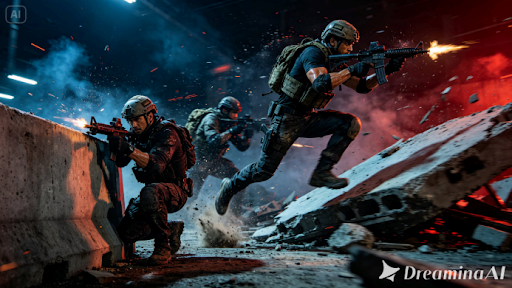
Character physicality determining action possibility
Your characters’ physical capabilities determine what action makes sense. An elderly person runs differently than an athlete. Someone trained in combat moves differently than someone fighting for survival without training. An exhausted character moves differently than a rested one. That consistency of physicality across your action sequence makes it feel authentic.
Describe your character’s physical state at action start. Are they fresh or tired? Trained or improvising? Confident or desperate? That baseline determines how their action unfolds. Seedance 2.5 maintains that physical consistency throughout sequences, rendering your character moving authentically based on their established state.
Action becoming genuinely cinematic
Action sequences transform when they combine physical authenticity with emotional purpose. With Dreamina and Seedance 2.5, action described in text becomes generated footage where choreography looks real and pacing creates genuine engagement, allowing text-to-video to make action filmmaking accessible to anyone with sequences worth bringing to life.