
The Richest UK Football Clubs and How They Spend Their Millions
Money in football has never been subtle-it glitters in stadium lights, sits in shirt sponsors, and roars in the transfer market. But in 2025, the richest UK football clubs are operating on a different scale altogether.
These teams don’t just spend to win; they invest to define eras, dictate narratives, and shape entire industries around them.
For bettors and analysts alike, the figures matter as much as the final score. Even bookmakers like BetinExchange monitor the flow of millions, because in modern football, financial muscle often predicts sporting power.
Manchester United, Manchester City, Chelsea: The Money Machines
When you speak about the richest, you begin in Manchester and end somewhere in London. Manchester United, Manchester City, and Chelsea are not just clubs-they are corporations with global strategies.
Their money doesn’t merely buy players; it builds empires. To illustrate just how much these clubs rake in yearly, here’s a snapshot of their revenues and net worths:
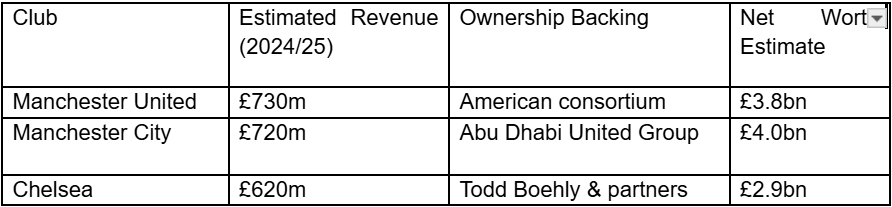
These numbers don’t exist in a vacuum. United ploughs money into global marketing and shirt sales in Asia, City expands academies in every corner of the planet, while Chelsea experiments with squad depth like a laboratory.
The cash flow isn’t about keeping up-it’s about staying ahead in a global race where the richest define the rules.
Arsenal, Liverpool, Tottenham: Spending with Strategy
The next tier isn’t exactly modest. Arsenal, Liverpool, and Tottenham are wealthy enough to build projects that last decades. Their spending habits differ from the Manchester-London axis above, focusing more on sustainability, development, and brand alignment.
What sets them apart is how carefully they balance financial muscle with tactical patience.
- Arsenal – Funnels revenue into young talent, modern stadium improvements, and global fan outreach.
- Liverpool – Reinforces a data-driven recruitment model and invests heavily in community-led programs.
- Tottenham – Prioritises stadium revenue streams and media rights over short-term transfer splurges.
Each of these clubs plays chess, not checkers. While they spend, they also protect long-term gains, creating business models admired by analysts far beyond football. Bookmakers like BetinExchange watch them closely, since these strategies often forecast not just trophies but profitability in betting markets too.
Beyond the Big Six: Newcastle, Aston Villa, West Ham Rising
Money has a way of finding new homes in football, and the Premier League’s financial revolution proves it. Newcastle, Aston Villa, and West Ham have joined the conversation of serious spenders, thanks to ambitious ownerships and clever revenue strategies.
They may not have the century-long branding of United or Liverpool, but they have war chests and visions that make them dangerous.
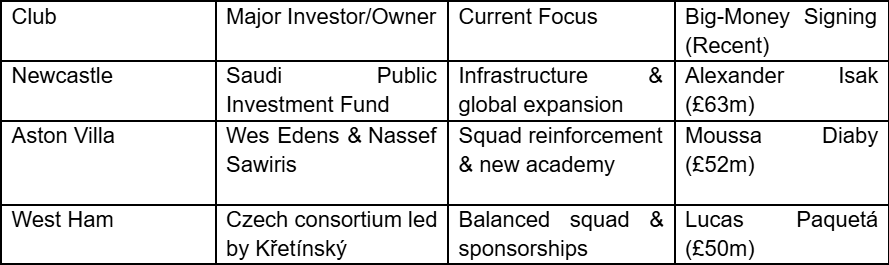
These clubs prove that wealth is no longer a closed circle. Each pound spent signals ambition, whether it’s modern training centres, marquee signings, or global branding plays. They show the Premier League has depth in both pocket and purpose-making the UK football scene richer in every sense.
Conclusion
The richest clubs in the UK aren’t just flexing financial muscles-they’re orchestrating entire industries with their billions. From Manchester’s dual giants to London’s polished projects and Newcastle’s oil-fuelled rise, money now shapes destiny as much as tactics.
Fans see transfers; accountants see investments; and bookmakers see trends. In 2025, football wealth is both a scoreboard and a strategy, ensuring that the UK remains the theatre where financial power and sporting dreams collide.
